Are branded socks good conference swag?
Branded socks reduce apparel sizing complexity, but comfort, stretch, seam construction, and design still decide whether anyone wears them.
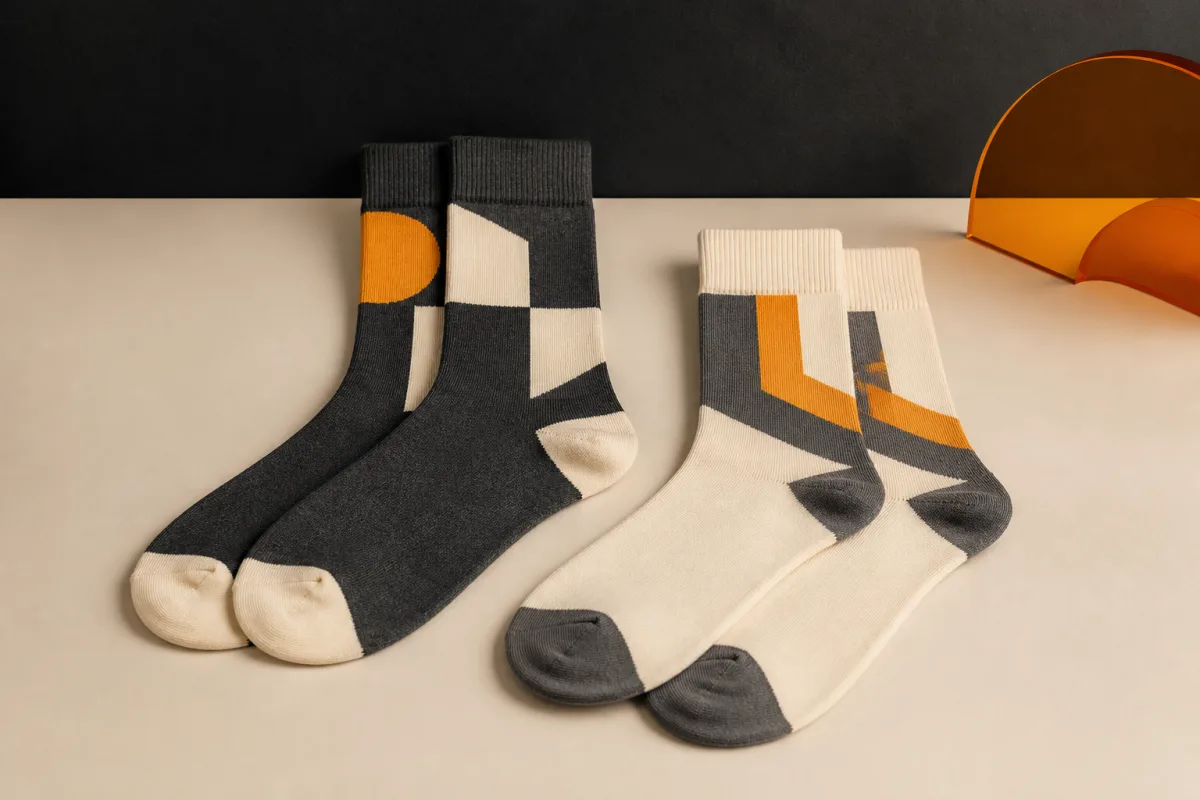
Branded socks are a practical alternative to shirts because one or two size bands can serve more people. They still need to feel like real socks rather than novelty packaging wrapped around weak elastic and a large logo.
Review at a glance
| Factor | Assessment |
|---|---|
| Indicative unit price | $4.45–$9.99 per pair |
| Common minimum | 36–100 pairs |
| Visitor value | Medium |
| Recommended distribution | Conversation-qualified |
| Best for | Design-led communities seeking wearable swag with fewer size variants than shirts |
| Main risk | One-size claims, uncomfortable seams, weak elastic, and loud branding can prevent wear |
| Verdict | Conditional choice |
Visitor value is an editorial assessment of likely usefulness and fit, not a measured engagement or conversion result. Validate the decision with your own audience and a production-equivalent sample.
Where this item earns its place
Socks work for playful brands, employee or customer communities, travel themes, outdoor events, and audiences comfortable with expressive apparel. Their compact size reduces booth storage and makes leftovers easier to reuse than dated event shirts.
Why it fails or creates waste
One-size-fits-most can exclude smaller or larger feet, and woven artwork may reduce stretch or distort the design. Toe seams, cuff pressure, fabric heat, pilling, and colorfastness become the actual brand experience after one day of wear.
What the price range means
On August 21, 2026, 4imprint listed full-color crew socks at $4.45–$7.15 and custom unisex socks at $5.39–$9.99 across their quantity ranges. Add size bands, artwork setup, individual pairing or packaging, freight, and tax to the landed price.
Test the sample before approving production
Use a production-equivalent sample, not only a digital artwork proof, and perform the test under the conditions a recipient will face. Record pass-or-fail results so price does not quietly overrule a real compatibility or quality problem.
- Intended size bands fit people near both ends of the stated range.
- Toe seam, cuff, heel placement, and inside floats remain comfortable for a full day.
- Pair retains shape and color after three label-compliant washes.
- Artwork reads correctly when stretched on a foot.
- Packaging states fiber content, size, and care without obscuring the design.
Have several intended wearers use and wash production-equivalent pairs, including people near the size boundaries. Reject a design that photographs well flat but becomes uncomfortable or unreadable when worn.
Distribution rule
Offer socks after a relevant conversation and let the visitor select a size band without comment from staff. Keep pairs sealed and organized so the booth does not turn into an apparel stockroom.
Final recommendation
Choose socks when the audience welcomes expressive apparel and the sample passes comfort and wash tests. Skip them when one-size coverage is implausible or visible branding would make ordinary wear unlikely.
Use the conference swag selection guide to compare the job, recipient, and landed cost. Review other options in the conference swag library before committing the order.
Next steps
Useful next steps
Guides
How to choose conference swag that earns its place
A practical method for choosing, sampling, distributing, and reviewing conference giveaways without buying clutter.
Guides
Are AirPods cases good conference swag?
AirPods cases are compact and inexpensive, but exact-generation compatibility sharply limits the audience and makes model identification essential.
Guides
Are baseball caps good conference swag?
Baseball caps provide visible, durable value for the right audience, but fit and conspicuous branding make them a poor universal handout.