Are branded T-shirts good conference swag?
Branded T-shirts can build community when people want the design, but sizing, fabric, print quality, and leftover inventory require deliberate control.
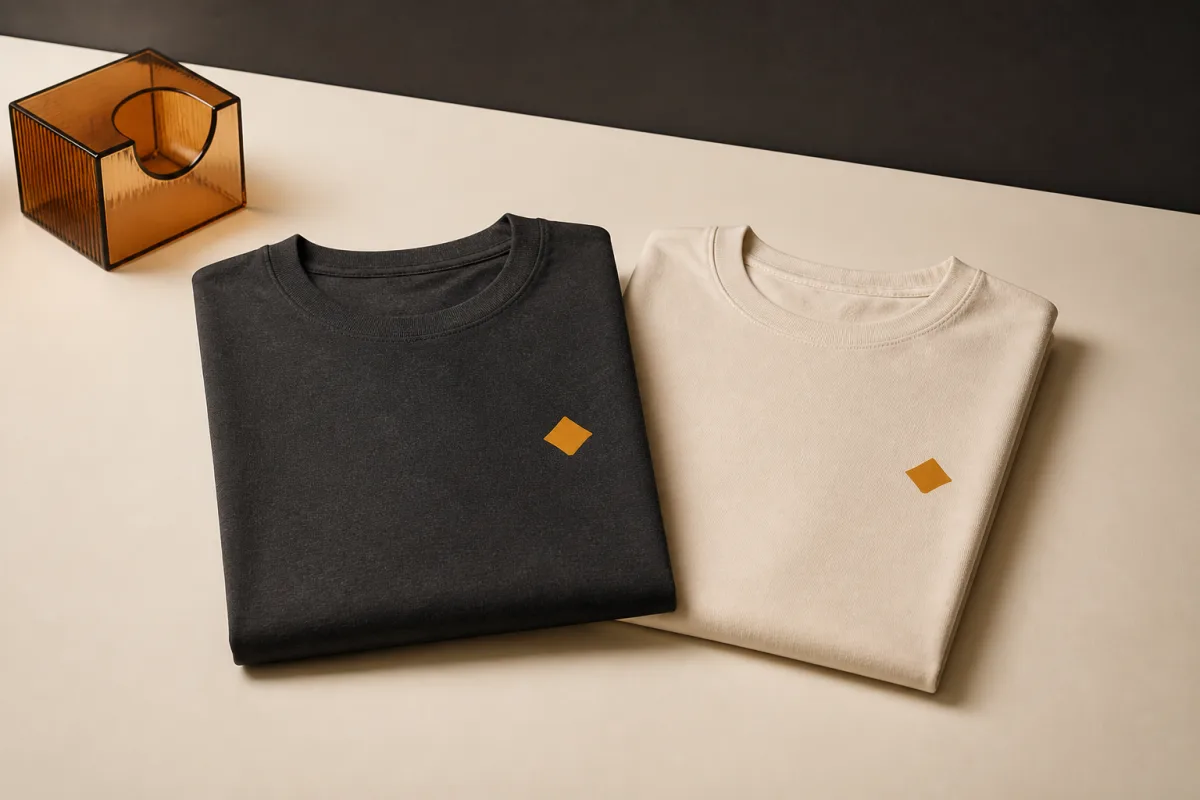
Branded T-shirts are good conference swag only when recipients would choose to wear the design outside the event. Treating a shirt as a walking billboard produces poor artwork, awkward handoffs, and boxes of unpopular sizes.
Review at a glance
| Factor | Assessment |
|---|---|
| Indicative unit price | $5.49–$11.69 each |
| Common minimum | 18–48 units |
| Visitor value | Medium |
| Recommended distribution | Conversation-qualified |
| Best for | Communities that genuinely identify with the design and can choose an appropriate size |
| Main risk | Poor fit, fabric, artwork, and size forecasting create visible leftovers |
| Verdict | Conditional choice |
Visitor value is an editorial assessment of likely usefulness and fit, not a measured engagement or conversion result. Validate the decision with your own audience and a production-equivalent sample.
Where this item earns its place
Shirts work for established communities, customer groups, launches, and events where the visual idea carries meaning beyond the company name. Letting visitors select fit and size gives them agency and provides better demand data for later orders.
Why it fails or creates waste
Unisex labels do not remove fit differences, while fabric weight, shrinkage, transparency, collar shape, and print feel strongly affect wear. Guessing a size curve from the booth team can overbuy fringe sizes and run out of common ones early.
What the price range means
On August 21, 2026, 4imprint listed a Gildan Softstyle T-shirt at $5.75–$11.22 and a Hanes Authentic T-shirt at $5.49–$11.49 across their quantity ranges. Normalize garment color, extended sizes, print locations and colors, then add setup, freight, tax, folding, and leftover inventory.
Test the sample before approving production
Use a production-equivalent sample, not only a digital artwork proof, and perform the test under the conditions a recipient will face. Record pass-or-fail results so price does not quietly overrule a real compatibility or quality problem.
- Wash and dry the sample three times according to its label before judging fit and print.
- Several people try the relevant cuts and sizes rather than relying on one unisex sample.
- Fabric is opaque, comfortable, and appropriate for the event climate.
- Artwork remains appealing when the wearer is not standing near the booth.
- Size labels, picking bins, and replenishment process work during a busy handoff.
Run a small internal or customer preorder using the production-equivalent blank and artwork. Actual size selections are more useful than asking people whether they generally like free shirts.
Distribution rule
Keep shirts behind the counter with visible size choices and give them after a relevant conversation or opt-in selection. Do not make staff guess a visitor’s size or display all stock where one person can take several.
Final recommendation
Buy T-shirts when the design has independent appeal, the blank passes a wash test, and size demand is measured. Skip logo-first artwork or any order whose leftover plan is simply to store the boxes for next year.
Use the conference swag selection guide to compare the job, recipient, and landed cost. Review other options in the conference swag library before committing the order.
Next steps
Useful next steps
Guides
How to choose conference swag that earns its place
A practical method for choosing, sampling, distributing, and reviewing conference giveaways without buying clutter.
Guides
Are AirPods cases good conference swag?
AirPods cases are compact and inexpensive, but exact-generation compatibility sharply limits the audience and makes model identification essential.
Guides
Are baseball caps good conference swag?
Baseball caps provide visible, durable value for the right audience, but fit and conspicuous branding make them a poor universal handout.