Are candy tins good conference swag?
Candy tins combine a consumable treat with reusable packaging, but taste, allergens, labeling, heat, freshness, and leftover tins complicate the apparent value.
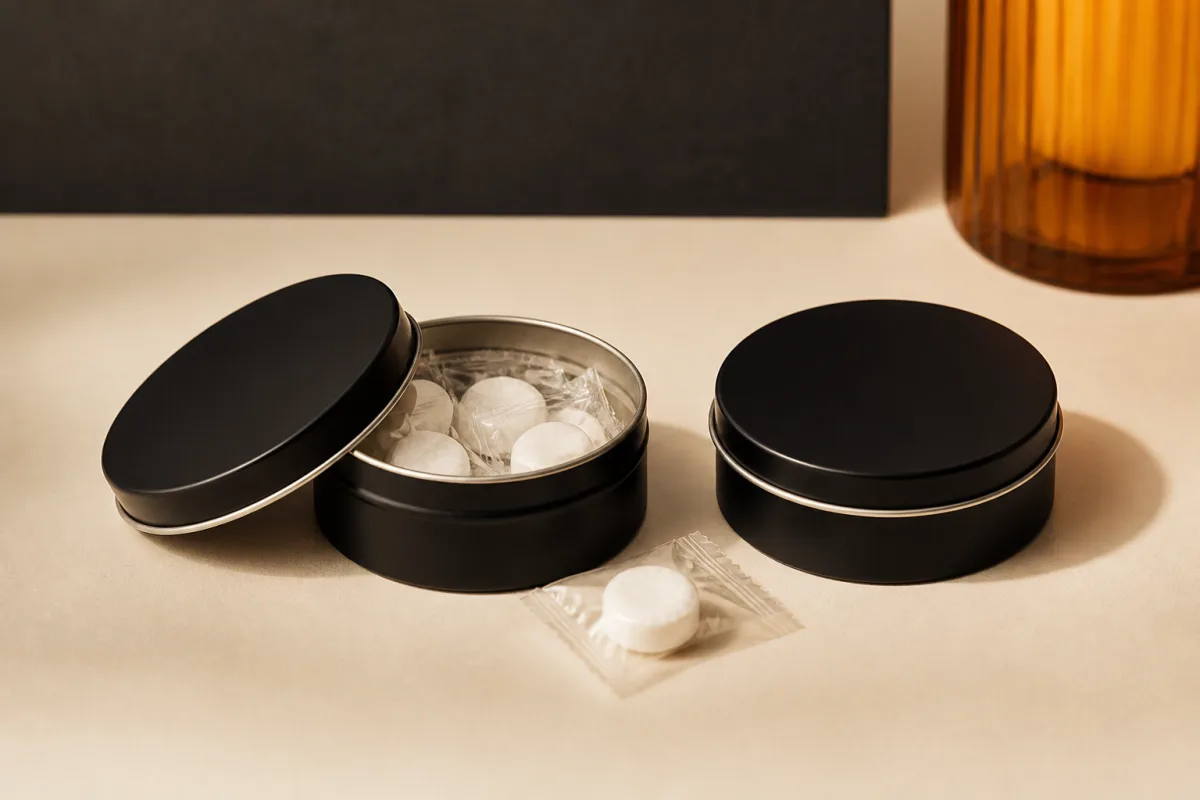
A candy tin can be useful when the food is appealing, properly labeled, and stable in the event conditions, but the tin does not automatically make a consumable giveaway durable. Choose it for a specific audience and flavor, not because the package appears more premium than loose candy.
Review at a glance
| Factor | Assessment |
|---|---|
| Indicative unit price | $4.46–$9.24 at about 250 units, before setup, shipping, and tax |
| Common minimum | 48–125 units |
| Visitor value | Medium |
| Recommended distribution | Conversation-qualified |
| Best for | A selected candy and campaign with complete labeling |
| Main risk | Allergens, poor taste, melting, stale stock, and unwanted packaging |
| Verdict | Conditional choice |
The medium value rating reflects the combination of an immediate treat and potentially reusable container. It is not evidence that the tin will be retained or that food produces better leads.
The candy matters more than the tin
Visitors decide first whether they want the food, which depends on ingredients, diet, taste, freshness, and trust in the sealed package. The tin can extend use afterward, but many small branded containers have no obvious second job.
Choose a fill that suits the event environment and audience. Chocolate, gummies, mints, and gum have different heat, allergen, dietary, residue, and shelf-life considerations that should not be hidden behind one generic “candy” label.
Compare the complete filled product
On August 21, 2026, PrintMagic listed a short round candy window tin with printed mints at a sale price of $4.46 each for 250, with a 125-unit minimum. NC Custom listed a window tin with gummy bears at $9.24 each for 252 plus a $50 setup charge.
Confirm fill weight, ingredient and allergen label, best-by date, seal, decoration, setup, shipping temperature, production timing, and replacement policy. The final tin may differ substantially from a mockup when required food information occupies part of the package.
Test taste, handling, and labeling
Order current production samples rather than keeping one old sales sample. Give sealed units to several people who can assess flavor and opening behavior, then expose additional samples to the likely booth temperature and transport cycle.
Check that:
- Ingredient, allergen, dietary, quantity, and supplier information is complete and readable.
- The tamper evidence and seal remain intact through shipping.
- Candy does not melt, stick, break down, or transfer odor.
- The tin opens without sharp edges and closes reliably.
- Staff can answer by pointing to the label rather than guessing about ingredients.
- Leftover stock can be stored and used before its documented date.
Food requirements and venue policies change, so obtain current documentation from the supplier and approval from the venue. Never let booth staff improvise allergen assurances.
Final recommendation
Choose candy tins when the selected food has broad, verified appeal and the tin supports a coherent message. Skip them when the team is using packaging to compensate for mediocre candy or cannot manage labeling, heat, and leftover inventory.
Apply the full-cost test in the conference swag selection guide. Compare simpler consumables and non-food items in the swag library.
Next steps
Useful next steps
Guides
How to choose conference swag that earns its place
A practical method for choosing, sampling, distributing, and reviewing conference giveaways without buying clutter.
Guides
Are AirPods cases good conference swag?
AirPods cases are compact and inexpensive, but exact-generation compatibility sharply limits the audience and makes model identification essential.
Guides
Are baseball caps good conference swag?
Baseball caps provide visible, durable value for the right audience, but fit and conspicuous branding make them a poor universal handout.