Are curated swag boxes good conference swag?
Curated swag boxes can create a deliberate premium gift, but item minimums, assembly, shipping, and filler make them unsuitable for open booth distribution.
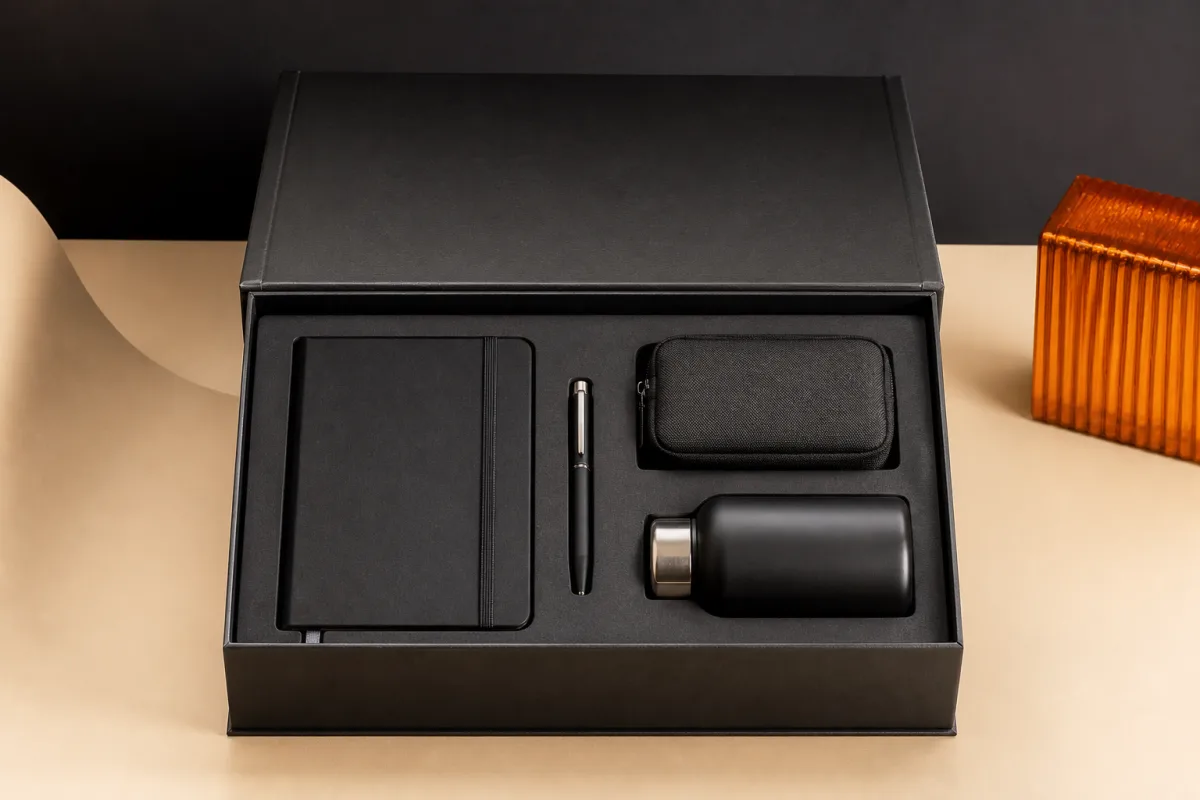
A curated swag box can be an effective premium follow-up when every item supports one recipient and one message. It is usually a poor booth handout because the box multiplies product minimums, packing work, storage, and shipping while encouraging teams to add filler.
Review at a glance
| Factor | Assessment |
|---|---|
| Indicative unit price | $20–$100+ per assembled box, before individual shipping and tax |
| Common minimum | 50–100 boxes |
| Visitor value | High when contents are useful and recipient-specific |
| Recommended distribution | High-value follow-up |
| Best for | Named recipients and post-event delivery |
| Main risk | An expensive collection of unrelated low-value items |
| Verdict | Conditional choice |
High visitor value is a judgment about a well-designed kit, not every box labeled “curated.” One excellent item with a useful note can outperform four weak products surrounded by tissue paper.
Curation needs a governing idea
A useful box might prepare a speaker for travel, help a customer run a workshop, or support a remote team’s conference watch party. Each item should contribute to that job, and the unboxing order should make the purpose clear without relying on decorative filler.
Boxes also work better when sent before or after the show. Direct fulfillment removes the burden of carrying a rigid package around the venue and lets the team confirm recipient addresses and preferences.
The price is built from several minimums
On August 21, 2026, Goody listed custom branded kits from $15–$20 for simple 100-unit kits to $65–$215 for many 50-unit kits. Fresh Coast Swag described custom and ready-made boxes with a 50-box minimum and a three-to-four-week production window.
The box price may omit individual address shipping, warehousing, pick-and-pack charges, custom packaging, kitting, inserts, and leftover inventory. Item-level minimums can also leave extra units that are not included in the nominal per-box figure.
Build and mail a pilot box
Create the full production-equivalent kit, seal it, and send it through the actual carrier route to someone uninvolved in the project. Ask that person to photograph each stage, identify the box’s purpose, and mark anything they would discard immediately.
Check that:
- Every item serves the same recipient and occasion.
- Nothing exists only to make the box look full.
- Fragile, liquid, food, and battery items are packed and documented correctly.
- The insert explains why the recipient received the kit without marketing clutter.
- Address collection, consent, undeliverable packages, and spare inventory have owners.
- The final landed cost includes kitting, storage, and each destination shipment.
If one item fails the pilot, remove it instead of automatically replacing it. A smaller box with a clearer point is more credible than a crowded assortment.
Final recommendation
Use a curated box for a small, known recipient list and a campaign with a concrete purpose. Skip it for walk-up traffic, unknown shipping addresses, or a budget that only works when several low-quality items are counted as value.
Plan the full landed cost with the conference swag selection guide. Review each proposed component separately in the conference swag library before approving the kit.
Next steps
Useful next steps
Guides
How to choose conference swag that earns its place
A practical method for choosing, sampling, distributing, and reviewing conference giveaways without buying clutter.
Guides
Are AirPods cases good conference swag?
AirPods cases are compact and inexpensive, but exact-generation compatibility sharply limits the audience and makes model identification essential.
Guides
Are baseball caps good conference swag?
Baseball caps provide visible, durable value for the right audience, but fit and conspicuous branding make them a poor universal handout.