Are die-cut stickers good conference swag?
Die-cut stickers are inexpensive and portable, but their value depends almost entirely on whether the design earns a place on a visitor's own belongings.
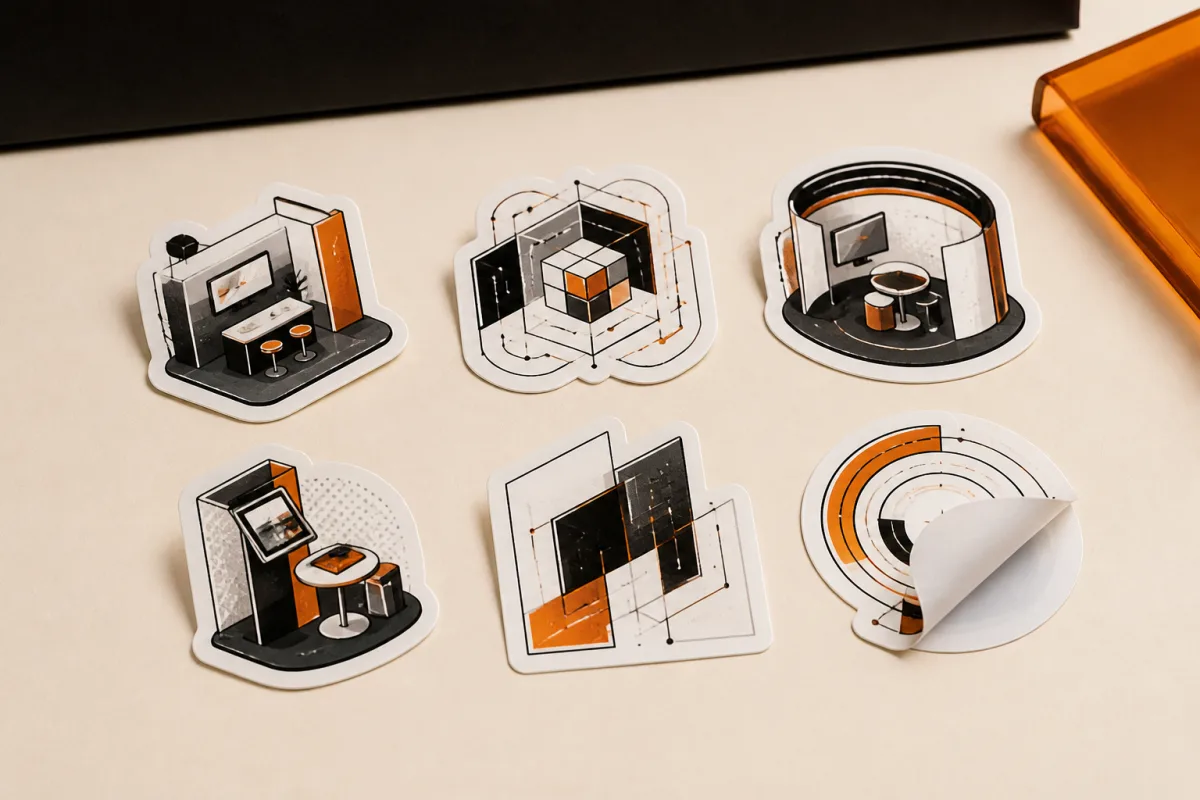
Die-cut stickers are good low-cost conference swag when the artwork works as a small piece of identity, humor, or community membership. A plain company logo may be easy to distribute, but it usually asks the visitor to advertise a brand before giving them a reason to care.
Review at a glance
| Factor | Assessment |
|---|---|
| Indicative unit price | $0.21–$1.25 each |
| Common minimum | 125–250 units |
| Visitor value | Medium |
| Recommended distribution | Open giveaway |
| Best for | Brands with artwork people would choose even without the logo |
| Main risk | Logo-first artwork gets collected at the booth but never applied |
| Verdict | Conditional choice |
Visitor value is an editorial assessment of likely usefulness and fit, not a measured engagement or conversion result. Validate the decision with your own audience and a production-equivalent sample.
Where this item earns its place
Stickers earn their place with developer communities, fan-like customer groups, creative audiences, and products that already have recognizable visual language. Their small size makes them easy to carry and lets a booth offer choice without creating freight or storage trouble.
Why it fails or creates waste
The main failure is confusing pickup with use. Visitors may collect stickers reflexively, yet a design that is too corporate, too large, difficult to peel, or unsuitable for a laptop will remain on its backing until it is discarded.
What the price range means
On August 21, 2026, 4imprint listed a three-inch full-color circle sticker from $0.21 to $2.79 across its quantity range and a printed silicone wristband at $0.75–$1.25 as a useful reminder that even tiny giveaways compete with other sub-$2 options. Use $0.21–$1.25 as an indicative sticker band, then add setup, freight, tax, rush production, and individual packaging if requested.
Test the sample before approving production
Use a production-equivalent sample, not only a digital artwork proof, and perform the test under the conditions a recipient will face. Record pass-or-fail results so price does not quietly overrule a real compatibility or quality problem.
- Peels cleanly without tearing the edge or separating the print layer.
- Adheres to a clean laptop shell and water bottle for one week without lifting.
- Removes without heavy residue from a surface the supplier says is suitable.
- Fine lines, small type, and the cut path remain legible at finished size.
- Someone outside the design team chooses it without being told which one to take.
Print a short pilot or obtain production-equivalent samples and let people choose anonymously. The most useful result is not whether they say the design looks good, but whether they actually apply it during the following week.
Distribution rule
Place a small quantity within reach and let visitors choose rather than pressing one into every hand. Count designs separately after the event so the next order reflects genuine preference instead of staff assumptions.
Final recommendation
Buy die-cut stickers when the design has independent appeal and the budget can support several choices. Skip a logo-only run if the team cannot name the surface, community, or feeling that would make a visitor use it.
Use the conference swag selection guide to compare the job, recipient, and landed cost. Review other options in the conference swag library before committing the order.
Next steps
Useful next steps
Guides
How to choose conference swag that earns its place
A practical method for choosing, sampling, distributing, and reviewing conference giveaways without buying clutter.
Guides
Are AirPods cases good conference swag?
AirPods cases are compact and inexpensive, but exact-generation compatibility sharply limits the audience and makes model identification essential.
Guides
Are baseball caps good conference swag?
Baseball caps provide visible, durable value for the right audience, but fit and conspicuous branding make them a poor universal handout.