Are embroidered patches good conference swag?
Embroidered patches can signal membership to the right community, but attachment method, border quality, artwork simplification, and surface compatibility narrow their audience.
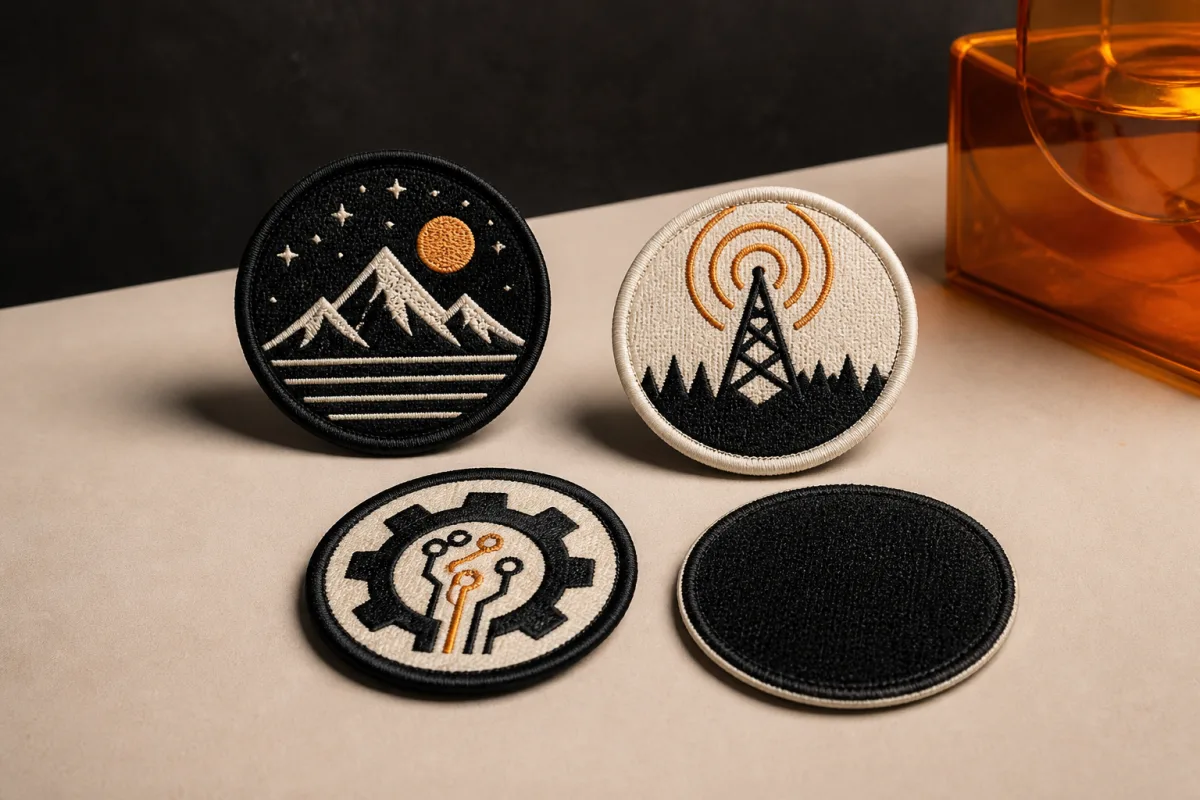
Embroidered patches work when recipients already customize jackets, bags, uniforms, or gear. For a general business audience, requiring sewing, heat application, or hook-and-loop space is too much friction for a logo with no other function.
Review at a glance
| Factor | Assessment |
|---|---|
| Indicative unit price | $2.55–$5.22 each |
| Common minimum | 50–100 units |
| Visitor value | Low |
| Recommended distribution | Conversation-qualified |
| Best for | Outdoor, maker, uniform, club, open-source, and enthusiast audiences already accustomed to attaching patches |
| Main risk | Recipients need a compatible surface and attachment method before the design has any function |
| Verdict | Conditional choice |
Visitor value is an editorial assessment of likely usefulness and fit, not a measured engagement or conversion result. Validate the decision with your own audience and a production-equivalent sample.
Where this item earns its place
They suit outdoor groups, makers, clubs, field teams, open-source communities, uniforms, and enthusiast events with established patch culture. A good patch can feel earned or collectible when the symbol represents participation rather than advertising.
Why it fails or creates waste
Small text and fine gradients do not translate well to thread, while rough backing, frayed borders, and weak adhesive undermine quality. Iron-on claims also depend on fabric and heat tolerance, and hook backing needs a matching loop surface.
What the price range means
On August 21, 2026, Panda Patches listed an indicative three-inch patch at $3.92 for 50, $2.55 for 100, and $1.18 for 500, while Panther Patch estimated about $5.22 each for 100 three-inch patches. Normalize backing, border, thread coverage, setup, freight, tax, and packaging before comparing quotes.
Test the sample before approving production
Use a production-equivalent sample, not only a digital artwork proof, and perform the test under the conditions a recipient will face. Record pass-or-fail results so price does not quietly overrule a real compatibility or quality problem.
- Artwork remains clear after conversion to the supplier’s actual stitch plan.
- Merrowed or laser-cut border stays neat after repeated handling.
- Chosen backing works on the exact intended fabric or loop surface.
- Patch survives care appropriate to the attached item without lifting or bleeding.
- Intended recipients already own something they would plausibly attach it to.
Approve a stitched sample, not a digital thread simulation, and attach it using the supplied method to representative gear. Wash or flex the test item as appropriate before approving a large run.
Distribution rule
Offer patches after a relevant community or gear conversation and explain the backing without claiming universal fabric compatibility. Do not hand them openly to an audience that has no established patch habit.
Final recommendation
Choose embroidered patches for audiences that already display them and for artwork designed around thread’s limits. Skip them when the attachment surface, method, or community meaning is merely assumed.
Use the conference swag selection guide to compare the job, recipient, and landed cost. Review other options in the conference swag library before committing the order.
Next steps
Useful next steps
Guides
How to choose conference swag that earns its place
A practical method for choosing, sampling, distributing, and reviewing conference giveaways without buying clutter.
Guides
Are AirPods cases good conference swag?
AirPods cases are compact and inexpensive, but exact-generation compatibility sharply limits the audience and makes model identification essential.
Guides
Are baseball caps good conference swag?
Baseball caps provide visible, durable value for the right audience, but fit and conspicuous branding make them a poor universal handout.