Are luggage tags good conference swag?
Luggage tags fit conference travelers naturally, but exposed personal information, weak attachments, and generic appearance undermine their core job.
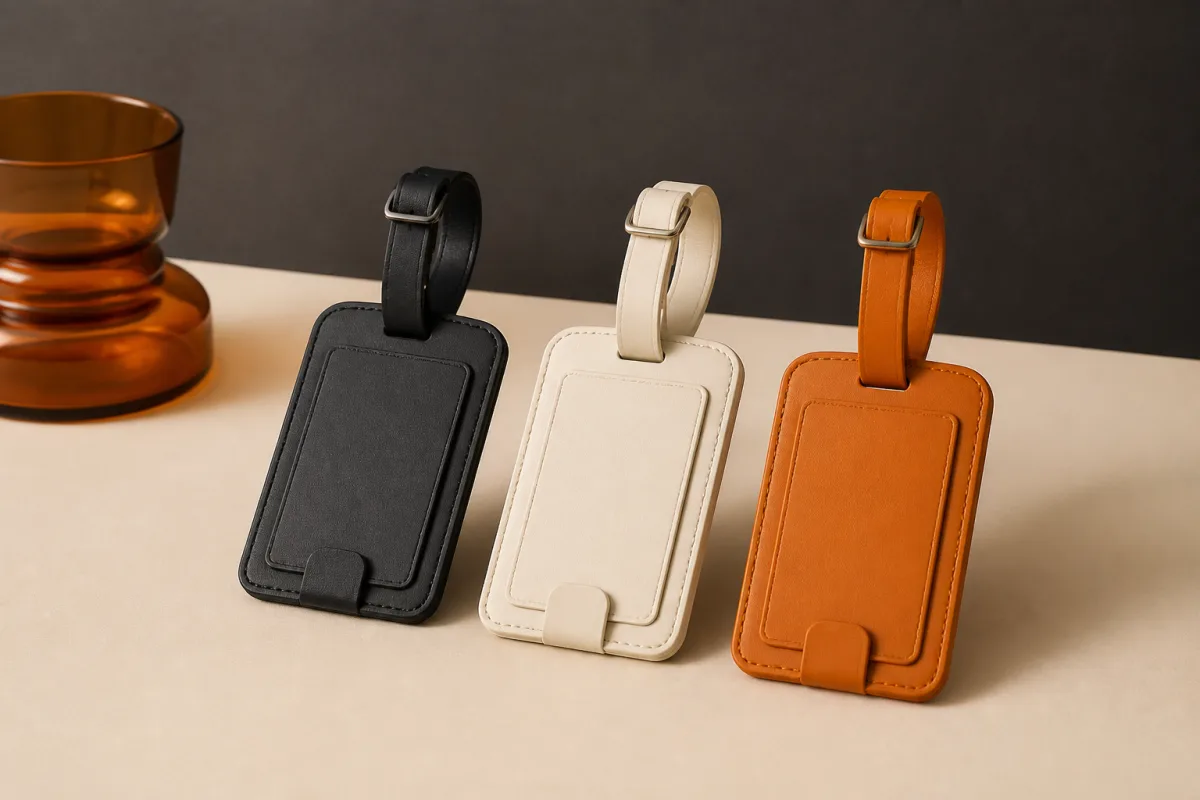
Luggage tags can be good conference swag because the audience is already traveling, but the tag must help identify a bag without unnecessarily exposing personal data. A bright durable design and covered contact field are more useful than a large logo beside a home address.
Review at a glance
| Factor | Assessment |
|---|---|
| Indicative unit price | $0.67–$3.15 each |
| Common minimum | 100–250 units |
| Visitor value | Medium |
| Recommended distribution | Conversation-qualified |
| Best for | Frequent travelers when privacy, attachment durability, and distinctive identification are designed together |
| Main risk | Visible personal details create privacy concerns, while weak straps fail during baggage handling |
| Verdict | Conditional choice |
Visitor value is an editorial assessment of likely usefulness and fit, not a measured engagement or conversion result. Validate the decision with your own audience and a production-equivalent sample.
Where this item earns its place
They suit travel, hospitality, international, mobility, and customer-event contexts where recipients check or store bags regularly. Distinctive color can help someone recognize luggage from a distance even before reading the tag.
Why it fails or creates waste
Open address cards reveal more information than many travelers want to display, while QR codes or online profiles add dependency and account questions. Thin loops, brittle plastic, weak buckles, and paper inserts may fail under ordinary baggage handling.
What the price range means
On August 21, 2026, 4imprint listed a basic luggage tag at $0.87–$1.72, a full-color version at $1.92–$3.15, and a Traveler opaque rectangle tag at $0.67–$1.12 across their quantity ranges. Add setup, privacy cover, attachment, freight, and tax.
Test the sample before approving production
Use a production-equivalent sample, not only a digital artwork proof, and perform the test under the conditions a recipient will face. Record pass-or-fail results so price does not quietly overrule a real compatibility or quality problem.
- Strap or loop survives repeated pulling, twisting, and snagging on a loaded bag.
- Contact field can be concealed while still allowing recovery information to be accessed.
- Writing or insert remains legible after moisture and abrasion.
- Tag color and shape help identify luggage without relying on personal data.
- Printed instructions recommend minimal contact information rather than a full home address.
Attach the sample to a checked or heavily handled test bag for several trips if possible. Review the privacy design from the perspective of someone standing beside the bag, not only the owner.
Distribution rule
Offer tags after a travel-related conversation and let recipients choose whether the privacy model suits them. Do not collect personal details at the booth to prefill tags unless that processing is necessary, consensual, and properly handled.
Final recommendation
Choose luggage tags when attachment strength, visible identification, and privacy are all designed well. Skip flimsy logo panels or formats that encourage people to display more personal information than recovery requires.
Use the conference swag selection guide to compare the job, recipient, and landed cost. Review other options in the conference swag library before committing the order.
Next steps
Useful next steps
Guides
How to choose conference swag that earns its place
A practical method for choosing, sampling, distributing, and reviewing conference giveaways without buying clutter.
Guides
Are AirPods cases good conference swag?
AirPods cases are compact and inexpensive, but exact-generation compatibility sharply limits the audience and makes model identification essential.
Guides
Are baseball caps good conference swag?
Baseball caps provide visible, durable value for the right audience, but fit and conspicuous branding make them a poor universal handout.