Are mints good conference swag?
Mints provide immediate value at conversation-heavy events, but portion format, ingredients, wrappers, freshness, and cleanup determine whether they are sensible.
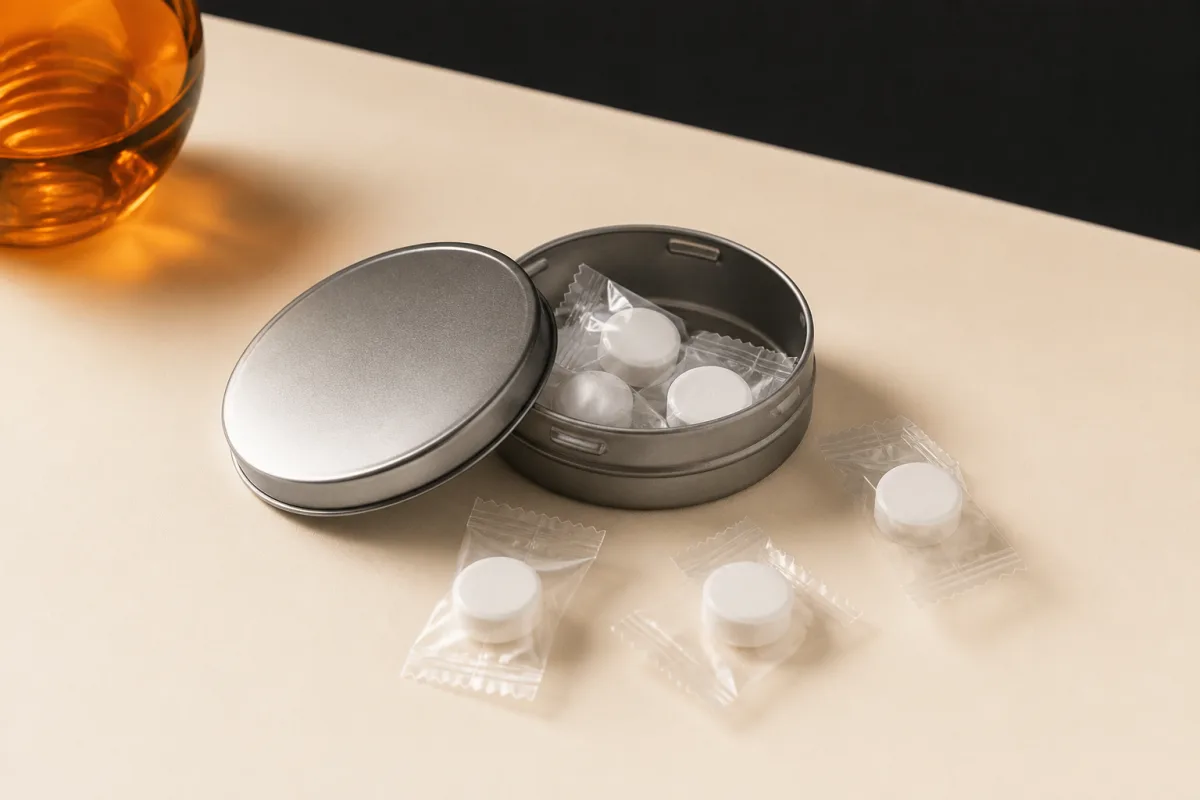
Mints are useful conference swag when the job is immediate: helping people feel comfortable before another close conversation. Their brand retention is secondary, so the smallest safe, labeled, and responsibly managed format is usually better than elaborate packaging.
Review at a glance
| Factor | Assessment |
|---|---|
| Indicative unit price | $0.08–$1.99 per serving or pack |
| Common minimum | 200–1,000 servings |
| Visitor value | Medium |
| Recommended distribution | Open giveaway |
| Best for | Conversation-heavy booths that need an immediate, discreet refreshment |
| Main risk | Single-use wrappers and tins can create more waste than the brief utility justifies |
| Verdict | Conditional choice |
Visitor value is an editorial assessment of likely usefulness and fit, not a measured engagement or conversion result. Validate the decision with your own audience and a production-equivalent sample.
Where this item earns its place
They suit sales meetings, networking lounges, food-service gaps, and booths where people speak at close range all day. Individually sealed portions support hygiene and make consumption predictable, though each wrapper adds waste.
Why it fails or creates waste
Open bowls create hygiene concerns, strong flavors exclude some visitors, and tins can cost far more than the mints while becoming unused clutter. Ingredient, allergen, sugar, sweetener, freshness, and disposal information must remain available even when branding dominates the pack.
What the price range means
On August 21, 2026, 4imprint listed a mini round mint tin at $1.15–$2.22 and a slider mint tin at $0.99–$1.99, while bulk wrapped mints were roughly $79–$159 per 1,000. Normalize servings, wrapper or tin, imprint, setup, freight, tax, and leftover shelf life.
Test the sample before approving production
Use a production-equivalent sample, not only a digital artwork proof, and perform the test under the conditions a recipient will face. Record pass-or-fail results so price does not quietly overrule a real compatibility or quality problem.
- Sealed product arrives with ingredient, allergen, lot, and best-before information intact.
- Flavor and texture remain acceptable after planned shipping and booth storage.
- Packaging opens quietly and easily without loose pieces.
- Portion is small enough for a brief conversation break.
- Booth has a visible plan for empty wrappers and leftover food.
Sample the exact production product after simulated event storage, not only a fresh unbranded mint. Keep documented traceability and do not repackage food at the booth in ways that remove required information.
Distribution rule
Offer sealed mints openly in a clean dispenser and replenish with washed or gloved hands according to an appropriate food-handling plan. Provide a nearby waste point and never pressure visitors to consume a giveaway.
Final recommendation
Choose mints when immediate utility fits the booth and the packaging, labeling, and waste are proportionate. Skip premium tins if they do not have a credible second use or if a simple hospitality supply would do the job.
Use the conference swag selection guide to compare the job, recipient, and landed cost. Review other options in the conference swag library before committing the order.
Next steps
Useful next steps
Guides
How to choose conference swag that earns its place
A practical method for choosing, sampling, distributing, and reviewing conference giveaways without buying clutter.
Guides
Are AirPods cases good conference swag?
AirPods cases are compact and inexpensive, but exact-generation compatibility sharply limits the audience and makes model identification essential.
Guides
Are baseball caps good conference swag?
Baseball caps provide visible, durable value for the right audience, but fit and conspicuous branding make them a poor universal handout.