Are pinback buttons good conference swag?
Pinback buttons are inexpensive, expressive, and easy to distribute, but logo-only art, sharp pins, and reluctance to pierce clothing limit their usefulness.
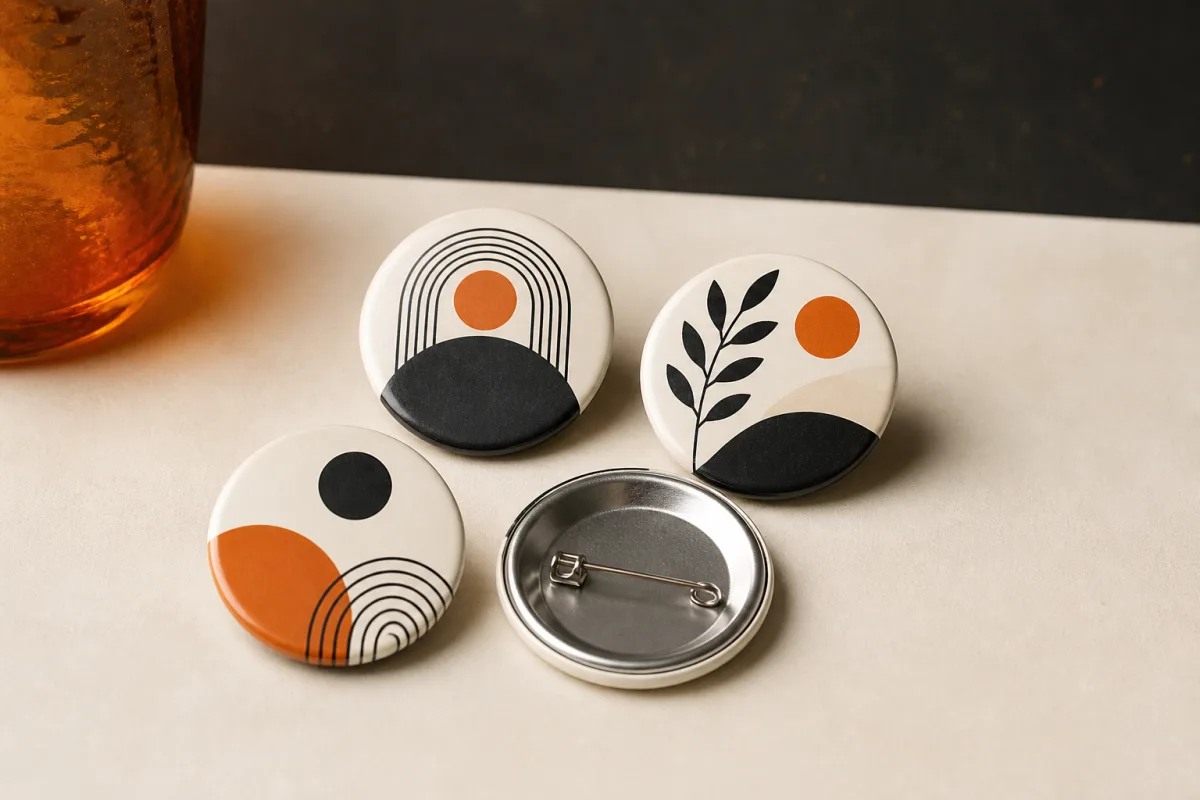
Pinback buttons can work when visitors choose a message that says something about them, but a button carrying only the exhibitor’s logo has little utility. Use several strong designs and let people opt in; do not pressure anyone to pierce clothing or wear the brand.
Review at a glance
| Factor | Assessment |
|---|---|
| Indicative unit price | $0.75–$1.99 in representative quantities, before shipping and tax |
| Common minimum | 100–250 units |
| Visitor value | Low for logo art; higher for identity or community art |
| Recommended distribution | Open giveaway |
| Best for | Choice-based messages people want to wear |
| Main risk | Generic art and a pin that can damage clothing |
| Verdict | Conditional choice |
The low rating describes an ordinary logo button and is not a measured attendee preference. A set that helps visitors signal a role, opinion, joke, or community may perform better because the wearer—not the exhibitor—receives the expressive value.
Choice makes the format more useful
Buttons are compact, visible, inexpensive, and capable of full-color art. A small menu of designs can start a conversation and gives the visitor agency over the message associated with their clothing or bag.
The format also has a sharp point and can leave a hole in fabric. Some visitors will attach one to a lanyard or bag, while others will reasonably decline regardless of how good the art is.
Current prices vary with size and volume
On August 21, 2026, Underabuck listed 1.25-inch custom round pinback buttons as low as $0.75 with a 100-unit minimum. Long Island DTF Printing listed full-color pinback buttons from $1.49 for a one-inch size to $1.99 for 2.25 inches with no hard minimum, while noting that single-unit orders are inefficient.
Normalize quotes for the same diameter, back, finish, quantity per design, proof, production time, and shipping. Splitting 500 buttons across five designs can price differently from ordering one 500-piece design.
Test the art at actual size
Print every design at final diameter before ordering, then produce a physical sample. Attach it to a lanyard, tote, jacket, and shirt, and inspect both how the art reads and how the pin behaves.
Verify:
- The message can be read at conversational distance.
- Type and fine details survive the curved edge and finish.
- The pin closes securely and does not protrude unexpectedly.
- Edges are smooth and the face does not separate under flex.
- The display lets visitors browse without handling every unit.
- Staff offer the choice without asking visitors to wear it immediately.
Avoid putting attendee status or sensitive identity claims on a button unless people deliberately choose them. The social meaning of the art matters more than the printing technique.
Final recommendation
Choose pinback buttons when the creative concept offers several wearable messages with genuine audience appeal. Skip a logo-only button or any plan that counts visible wear as a condition of receiving the item.
Use the conference swag selection guide to evaluate the idea before the cheap unit price drives the decision. Compare other expressive items in the swag library.
Next steps
Useful next steps
Guides
How to choose conference swag that earns its place
A practical method for choosing, sampling, distributing, and reviewing conference giveaways without buying clutter.
Guides
Are AirPods cases good conference swag?
AirPods cases are compact and inexpensive, but exact-generation compatibility sharply limits the audience and makes model identification essential.
Guides
Are baseball caps good conference swag?
Baseball caps provide visible, durable value for the right audience, but fit and conspicuous branding make them a poor universal handout.