Are reusable straws good conference swag?
Reusable straws are compact, but generic sustainability claims, cleaning effort, existing ownership, and inconsistent daily need make them a weak default giveaway.
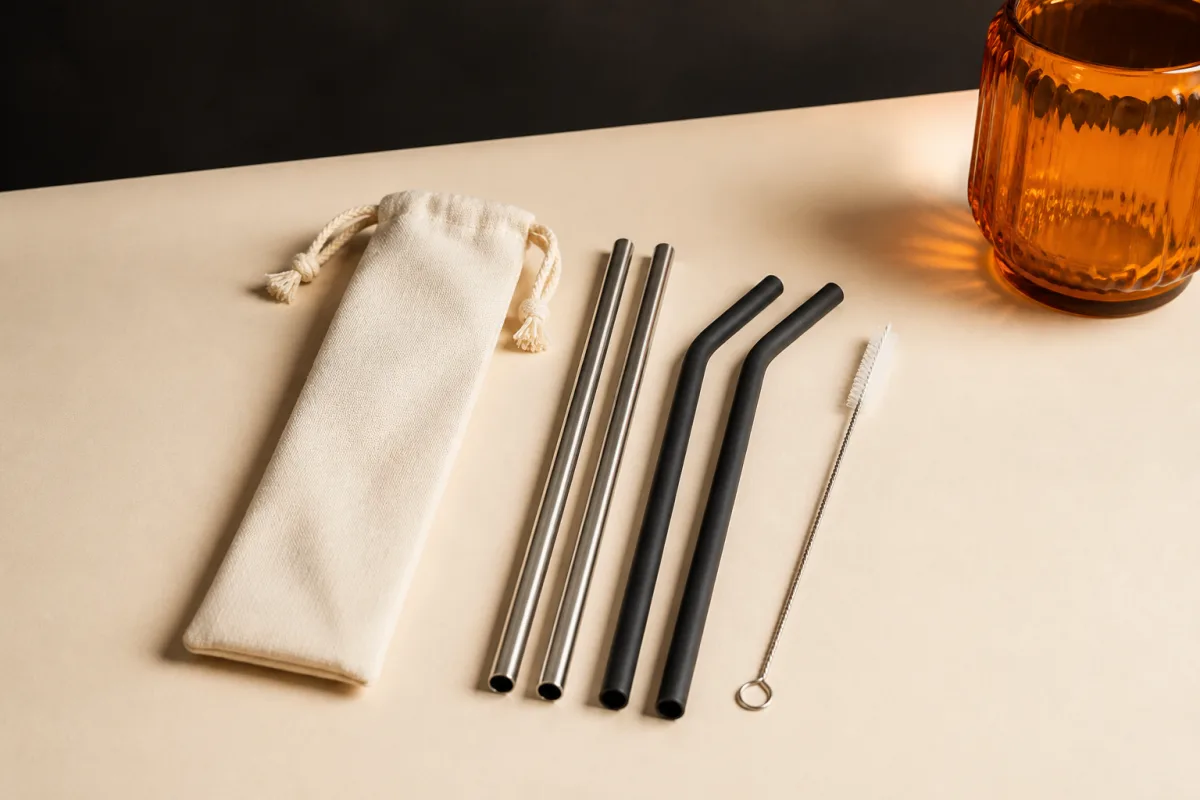
Reusable straws are usually not strong conference swag because the category is mature and many visitors already have one or do not use straws regularly. A new straw only reduces waste if it is carried, cleaned, and repeatedly substituted for disposable ones.
Review at a glance
| Factor | Assessment |
|---|---|
| Indicative unit price | $1.15–$4.75 per set |
| Common minimum | 50–100 units |
| Visitor value | Low |
| Recommended distribution | Conversation-qualified |
| Best for | A defined reusable-drinkware program where material, cleaning, and actual recipient need are clear |
| Main risk | Many recipients already own one, while cleaning, mouth feel, safety, and forgetting it limit use |
| Verdict | Usually skip |
Visitor value is an editorial assessment of likely usefulness and fit, not a measured engagement or conversion result. Validate the decision with your own audience and a production-equivalent sample.
Where this item earns its place
They can fit a reusable-cup program, accessibility-informed drink setup, hospitality workflow, or audience that has specifically requested them. A pouch and cleaning brush may make carry realistic, though they add pieces and packaging.
Why it fails or creates waste
Metal, silicone, and rigid straws feel different, and some users have safety or accessibility reasons for preferring another option. Residue, lost brushes, forgotten pouches, questionable food-contact documentation, and unsupported environmental claims can erase the intended value.
What the price range means
On August 21, 2026, 4imprint listed a single stainless-steel straw at $1.15–$2.09 and a stainless-steel straw set with cotton pouch at $2.59–$4.75 across their quantity ranges. Add setup, brush, pouch, freight, tax, and credible food-contact documentation.
Test the sample before approving production
Use a production-equivalent sample, not only a digital artwork proof, and perform the test under the conditions a recipient will face. Record pass-or-fail results so price does not quietly overrule a real compatibility or quality problem.
- Supplier identifies all food-contact materials and applicable compliance for the intended market.
- Edges are smooth, diameter suits intended drinks, and material has no persistent taste or odor.
- Brush reaches the full interior and the set dries without trapping moisture.
- Pouch contains used pieces without leaking residue into a bag.
- Intended recipients can name when they would carry and use it.
Use and clean the production-equivalent sample for several weeks with the intended drinks. Do not claim a net environmental benefit without evidence that accounts for material, production, cleaning, and repeated substitution.
Distribution rule
Distribute only when a drinkware or reuse conversation reveals genuine need, and include clear cleaning instructions. Keep disposable or flexible options available where accessibility and safety require them.
Final recommendation
Usually skip reusable straws as generic sustainability swag. Choose them only as one deliberate part of a broader, repeatedly used drinkware system.
Use the conference swag selection guide to compare the job, recipient, and landed cost. Review other options in the conference swag library before committing the order.
Next steps
Useful next steps
Guides
How to choose conference swag that earns its place
A practical method for choosing, sampling, distributing, and reviewing conference giveaways without buying clutter.
Guides
Are AirPods cases good conference swag?
AirPods cases are compact and inexpensive, but exact-generation compatibility sharply limits the audience and makes model identification essential.
Guides
Are baseball caps good conference swag?
Baseball caps provide visible, durable value for the right audience, but fit and conspicuous branding make them a poor universal handout.