Are reusable utensil sets good conference swag?
Reusable utensil sets can support regular packed lunches, but food-contact quality, cleaning access, used storage, and carry size determine whether they leave a drawer.
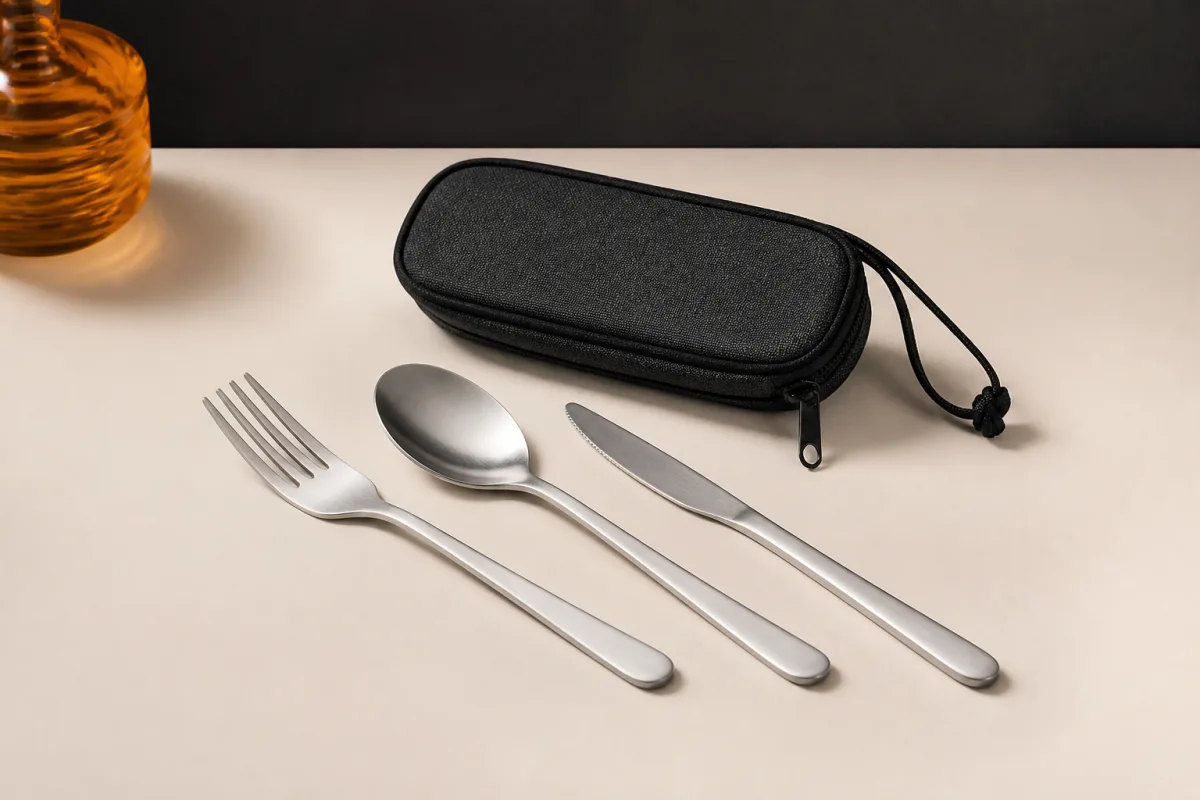
Reusable utensil sets are useful only when recipients regularly eat away from a stocked kitchen and can wash the pieces. The case must handle the trip after lunch as well as before it, or the set creates a hygiene problem inside a work bag.
Review at a glance
| Factor | Assessment |
|---|---|
| Indicative unit price | $1.59–$9.75 per set |
| Common minimum | 25–100 units |
| Visitor value | Medium |
| Recommended distribution | Conversation-qualified |
| Best for | Office lunch, travel, campus, and field-work audiences with reliable washing access |
| Main risk | Size, used-utensil storage, cleaning, food-contact quality, and existing cutlery reduce practical adoption |
| Verdict | Conditional choice |
Visitor value is an editorial assessment of likely usefulness and fit, not a measured engagement or conversion result. Validate the decision with your own audience and a production-equivalent sample.
Where this item earns its place
They fit campus, office lunch, field work, travel, camping, and food-service audiences with predictable meals and washing access. A compact fork, spoon, and perhaps knife is more practical than a large kit filled with rarely used tools.
Why it fails or creates waste
Bulky cases, weak hinges, rough bamboo, flexible plastic, poor metal finish, and trapped food residue reduce trust. The item also duplicates cutlery many people already keep at work or receive with takeaway food.
What the price range means
On August 21, 2026, 4imprint listed a Lunch Time reusable cutlery set at $1.59–$2.75 and a stainless and ceramic utensil set at $5.29–$9.75 across their quantity ranges. Add setup, case or pouch, food-contact documentation, freight, and tax.
Test the sample before approving production
Use a production-equivalent sample, not only a digital artwork proof, and perform the test under the conditions a recipient will face. Record pass-or-fail results so price does not quietly overrule a real compatibility or quality problem.
- Supplier identifies all food-contact materials and applicable market compliance.
- Fork, spoon, and knife perform on an ordinary lunch without bending or sharp unfinished edges.
- Case contains damp used pieces without opening or leaking residue.
- Every surface is reachable during hand or dishwasher cleaning as claimed.
- Dry set remains compact and quiet in a work bag for a week.
Use the exact sample for several meals, then clean and carry it through the full wet-to-dry cycle. Reject sets whose case is designed only for pristine display rather than used utensils.
Distribution rule
Offer sets after a lunch, travel, campus, or field-work conversation rather than to every visitor. Include concise cleaning and care instructions while avoiding broad environmental claims not supported by use evidence.
Final recommendation
Choose reusable utensils when recurring meal context, safe materials, and practical used storage are clear. Skip oversized kits or audiences with no reliable washing routine.
Use the conference swag selection guide to compare the job, recipient, and landed cost. Review other options in the conference swag library before committing the order.
Next steps
Useful next steps
Guides
How to choose conference swag that earns its place
A practical method for choosing, sampling, distributing, and reviewing conference giveaways without buying clutter.
Guides
Are AirPods cases good conference swag?
AirPods cases are compact and inexpensive, but exact-generation compatibility sharply limits the audience and makes model identification essential.
Guides
Are baseball caps good conference swag?
Baseball caps provide visible, durable value for the right audience, but fit and conspicuous branding make them a poor universal handout.